The world's oceans have always been a dynamic and complex system, influencing climate patterns, marine ecosystems, and global trade routes. Understanding their behavior has long been a challenge for scientists, policymakers, and industries reliant on maritime operations. Now, a groundbreaking platform is changing the game: Digital Ocean Twin: Global Ocean Current Real-Time Simulation Platform. This innovative system offers an unprecedented level of insight into ocean currents, providing real-time data and predictive modeling that could revolutionize how we interact with the seas.
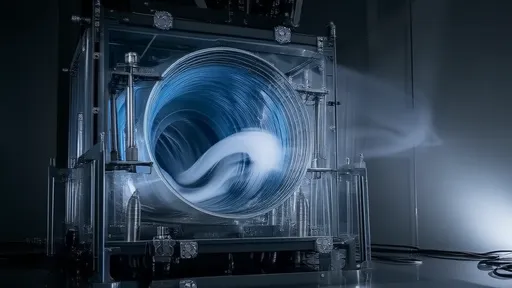
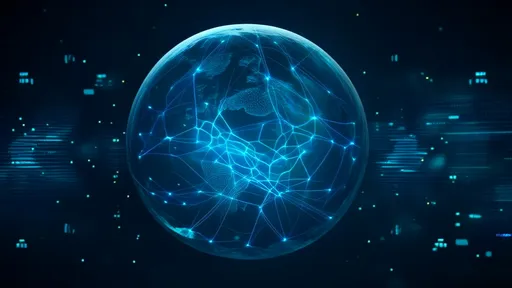
At its core, the Digital Ocean Twin is a high-fidelity virtual replica of Earth's ocean systems. By leveraging advanced computational models, satellite data, and in-situ measurements, the platform simulates ocean currents with remarkable accuracy. Unlike traditional oceanographic models that operate on delayed or historical data, this system processes live inputs, updating its simulations continuously. The implications are profound—from improving weather forecasting to optimizing shipping routes and even aiding in search-and-rescue operations.
The technology behind the Digital Ocean Twin is nothing short of extraordinary. It combines machine learning algorithms with fluid dynamics principles, allowing it to predict how currents will behave under various conditions. For instance, the platform can simulate how a sudden shift in wind patterns might alter ocean circulation or how a melting ice sheet could impact salinity and current strength. These capabilities are powered by supercomputers capable of processing petabytes of data in near real-time, making the Digital Ocean Twin one of the most sophisticated environmental modeling tools ever created.
One of the most exciting aspects of this platform is its potential applications across multiple sectors. In the shipping industry, companies can use the simulations to plot more efficient routes, saving fuel and reducing emissions. For renewable energy projects, such as offshore wind farms or tidal power installations, the platform can help identify optimal locations based on current patterns. Even in disaster response, the Digital Ocean Twin could prove invaluable—predicting how oil spills might spread or where debris from a shipwreck could drift.
Climate scientists are particularly enthusiastic about the platform's capabilities. Oceans play a critical role in regulating Earth's climate, absorbing heat and carbon dioxide from the atmosphere. By providing a clearer picture of how currents distribute these elements, the Digital Ocean Twin could enhance our understanding of climate change dynamics. This, in turn, could lead to more accurate predictions about rising sea levels, ocean acidification, and the frequency of extreme weather events.
Beyond its scientific and commercial uses, the platform also holds promise for education and public engagement. Imagine students exploring ocean currents in a dynamic, interactive model or journalists using the simulations to explain complex marine phenomena to their audiences. The Digital Ocean Twin has the potential to democratize access to oceanographic data, fostering greater awareness and stewardship of our planet's blue heart.
Of course, a project of this scale does not come without challenges. Data accuracy remains a constant concern, as gaps in satellite coverage or sensor malfunctions could skew results. There are also questions about how to integrate the platform with existing systems used by governments and industries. And as with any powerful tool, ethical considerations must be addressed—who gets access to the data, and how might it be weaponized or commercialized?
Despite these hurdles, the team behind the Digital Ocean Twin is optimistic. Collaborations with international research institutions, government agencies, and private sector partners are already underway to refine the platform and expand its capabilities. Future iterations may include even more granular simulations, perhaps incorporating biological data to model marine life migrations or adding finer coastal details to improve tsunami prediction models.
What makes this initiative truly remarkable is its timing. As the world grapples with the escalating impacts of climate change, having a real-time window into ocean behavior could prove indispensable. The oceans have always been Earth's great mystery—vast, deep, and largely unexplored. With the Digital Ocean Twin, we're not just peering into that mystery; we're beginning to understand it in ways that were unimaginable just a decade ago.
The launch of this platform marks a new era in oceanography and environmental science. It represents a convergence of cutting-edge technology, big data analytics, and our growing recognition of the oceans' central role in planetary health. While the Digital Ocean Twin is still in its relative infancy, its potential to transform how we study, utilize, and protect our oceans is already clear. In a world where the seas are both a vital resource and a vulnerable ecosystem, such tools may well become our most valuable allies in navigating an uncertain future.
By /Jul 28, 2025
By /Jul 28, 2025
By /Jul 28, 2025
By /Jul 28, 2025
By /Jul 28, 2025
By /Jul 28, 2025
By /Jul 28, 2025
By /Jul 28, 2025
By /Jul 28, 2025

By /Jul 28, 2025

By /Jul 28, 2025
By /Jul 28, 2025
By /Jul 28, 2025

By /Jul 28, 2025
By /Jul 28, 2025
By /Jul 28, 2025

By /Jul 28, 2025

By /Jul 28, 2025
By /Jul 28, 2025
By /Jul 28, 2025
