The universe is filled with mysteries, and among the most elusive is the question of neutrino mass. For decades, physicists have grappled with the peculiar behavior of these ghostly particles, which flit through matter almost entirely undetected. The Standard Model of particle physics initially assumed neutrinos to be massless, but experiments have since shattered that assumption. Yet, how—and why—neutrinos acquire mass remains an open question. One tantalizing possibility is the existence of sterile neutrinos, a hypothetical fourth flavor that could explain anomalies in experimental data and even account for dark matter.
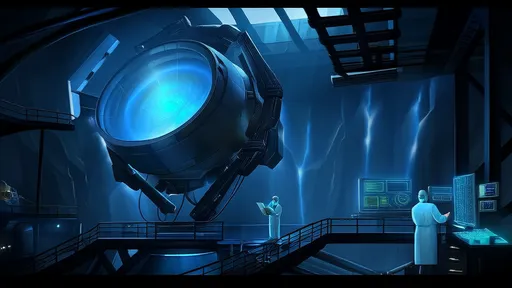
Deep beneath the Earth’s surface, in abandoned mines and mountain tunnels, scientists are hunting for these elusive particles. The search for sterile neutrinos is not for the faint of heart. It requires ultra-sensitive detectors shielded from cosmic rays and other background noise. Experiments like the Baksan Neutrino Observatory in Russia and the Deep Underground Neutrino Experiment (DUNE) in the United States are at the forefront of this quest. By studying neutrino oscillations—the phenomenon where neutrinos switch between flavors—researchers hope to catch a glimpse of something beyond the Standard Model.
The implications of discovering sterile neutrinos would be profound. Not only would it revolutionize particle physics, but it could also provide clues about the universe’s missing mass. Dark matter, which makes up roughly 27% of the cosmos, has yet to be directly observed. Some theories suggest sterile neutrinos could be a key component. Their weak interactions with ordinary matter would make them nearly invisible, yet their gravitational influence would align with dark matter’s observed effects. If proven, this would solve two mysteries at once.
However, the road to discovery is fraught with challenges. Early hints of sterile neutrinos, such as the controversial LSND anomaly at Los Alamos, have yet to be confirmed. Later experiments, like MiniBooNE, have reported conflicting results, leaving physicists in a state of cautious intrigue. The scientific community remains divided, with some arguing that systematic errors or unknown physics could explain the anomalies. The only way forward is more data—and more sensitive experiments.
Underground labs play a critical role in this pursuit. By situating detectors deep underground, researchers can minimize interference from cosmic rays. Facilities like SNOLAB in Canada and the Jinping Underground Laboratory in China are pushing the boundaries of sensitivity. These labs are not just hunting for sterile neutrinos; they’re also probing other fundamental questions, such as the nature of dark matter and the behavior of neutrinos from supernovae. The interdisciplinary nature of this work underscores its importance.
As technology advances, so too does the precision of neutrino experiments. Next-generation detectors, such as those planned for DUNE, will use liquid argon time-projection chambers to achieve unprecedented resolution. These instruments could finally determine whether sterile neutrinos exist—or if another explanation is needed for the anomalies observed so far. The stakes are high, and the scientific community is watching closely.
Beyond the technical challenges, there’s a philosophical dimension to this search. Neutrinos, with their ethereal properties, remind us how much we still don’t understand about the universe. The discovery of sterile neutrinos would not just fill a gap in the Standard Model; it would open a new chapter in physics. Whether these particles are real or not, the pursuit itself is driving innovation and collaboration across borders and disciplines.
For now, the hunt continues in the quiet darkness beneath our feet. Every new experiment brings us closer to an answer, even as the data raises new questions. The story of sterile neutrinos is far from over—and the next breakthrough could come from the most unexpected places. Until then, physicists will keep digging, both literally and figuratively, for the truth behind one of nature’s most enigmatic particles.

By /Jul 28, 2025
By /Jul 28, 2025

By /Jul 28, 2025
By /Jul 28, 2025
By /Jul 28, 2025
By /Jul 28, 2025

By /Jul 28, 2025
By /Jul 28, 2025
By /Jul 28, 2025

By /Jul 28, 2025

By /Jul 28, 2025
By /Jul 28, 2025
By /Jul 28, 2025

By /Jul 28, 2025

By /Jul 28, 2025

By /Jul 28, 2025
By /Jul 28, 2025
By /Jul 28, 2025

By /Jul 28, 2025
By /Jul 28, 2025
