Global commodity markets are experiencing heightened volatility as shifting supply dynamics and uncertain demand patterns create a turbulent trading environment. The crude oil sector, in particular, has become a focal point for analysts and investors attempting to navigate the complex interplay of geopolitical tensions, production adjustments, and evolving energy transition policies. Against this backdrop, Goldman Sachs has released a startling projection that Brent crude could fall to $50 per barrel by the end of 2026, a forecast that has sent ripples through financial circles and energy-dependent economies.
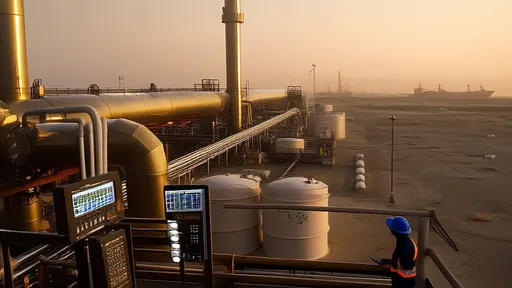
The investment bank's analysis points to a fundamental recalibration of long-term energy supply and demand. Goldman analysts highlight that the accelerated adoption of electric vehicles, improvements in energy efficiency, and stronger policy support for renewable energy are collectively reducing the growth trajectory for oil consumption. Meanwhile, production capacities, particularly in the Americas and the Middle East, remain robust. The anticipated return of Iranian barrels to the market and sustained output from U.S. shale producers are expected to further contribute to a looser supply environment.
This projected price collapse is not merely a short-term correction but potentially a signal of a deeper structural shift in the global energy landscape. For decades, oil has been the undisputed king of commodities, its price a barometer of global economic health and geopolitical stability. A sustained move to $50 would represent a dramatic departure from the triple-digit prices seen in previous decades and even the $60-$80 range that many producers now consider necessary to balance their budgets. Such a decline would have profound implications, reshaping national economies, corporate strategies, and global power dynamics.
The geopolitical ramifications are immense. Petrostates that have built their entire fiscal frameworks around much higher oil prices would face existential budgetary crises. Nations like Saudi Arabia, Russia, and Nigeria would be forced to accelerate their economic diversification plans or face severe social and political strain. The balance of power within OPEC+ would be tested as members scramble to protect market share in a lower-price environment, potentially leading to internal discord and the breakdown of production agreements that have, until now, provided a floor for prices.
From an investment perspective, the energy sector is bracing for impact. Major integrated oil companies, which have already begun pivoting toward natural gas and renewables, might be forced to accelerate their transitions. High-cost projects, particularly in deepwater and oil sands, would become increasingly uneconomical, leading to stranded assets and write-downs. The shale industry, often hailed for its resilience, would face its sternest test yet, with many highly leveraged operators struggling to remain solvent in a $50 world. Wall Street's appetite for funding new fossil fuel exploration would likely diminish further, diverting capital toward cleaner energy technologies.
Conversely, a prolonged period of lower oil prices would act as a stimulative force for oil-importing nations. Countries like India, China, and Japan would see their import bills shrink, reducing inflationary pressures and improving current account balances. This could provide central banks with more flexibility in monetary policy and free up government resources for fiscal stimulus or investment in infrastructure. Consumers worldwide would benefit from lower prices at the pump, effectively putting more disposable income in their pockets and supporting broader consumer spending.
However, the energy transition itself presents a complex paradox. Cheaper fossil fuels could potentially slow the adoption of alternatives by making electric vehicles and renewables less economically competitive in the short term. If consumers face lower gasoline prices, the urgency to switch to more efficient vehicles or alternative modes of transport may diminish. Policymakers might find it more challenging to justify subsidies for clean energy or taxes on carbon when the immediate economic pain of high energy costs is absent. This dynamic creates a significant risk that near-term consumer benefits could come at the expense of long-term climate goals.
The Goldman Sachs forecast, while stark, is not without its detractors. Other prominent banks and energy consultancies have expressed skepticism, arguing that chronic underinvestment in new oil projects, declining production from mature fields, and the inherent inertia of the global energy system will maintain a tighter supply balance than Goldman anticipates. They point to the fact that investment in new oil exploration has fallen dramatically since the 2014 price crash and has failed to recover adequately, setting the stage for a supply crunch later this decade that could push prices higher, not lower.
Ultimately, the future of oil prices remains shrouded in uncertainty, caught between the powerful forces of technological disruption, policy intervention, and deeply entrenched global dependency. Goldman Sachs's $50 prediction serves as a provocative scenario that forces markets and governments to confront the possibility of a world where oil is no longer a scarce and coveted resource but an abundant commodity in gradual decline. Whether this vision materializes will depend on a multitude of factors, from the pace of technological innovation to the outcome of geopolitical conflicts and the resolve of global climate action.
As 2026 approaches, market participants will be watching key indicators: the penetration rates of EVs in major auto markets, the fiscal health of key oil producers, inventory levels in storage hubs, and the cohesion of OPEC+. Each data point will contribute to the narrative of oil's future value. One thing is certain: the era of predictable, stable oil prices is over, and the coming years will be defined by volatility and transformation as the world grapples with the complex journey toward a new energy equilibrium.

By /Sep 15, 2025

By /Sep 15, 2025

By /Sep 15, 2025

By /Sep 15, 2025

By /Sep 15, 2025

By /Sep 15, 2025

By /Sep 15, 2025

By /Sep 15, 2025

By /Sep 15, 2025

By /Sep 15, 2025
By /Sep 15, 2025

By /Sep 15, 2025
By /Sep 15, 2025

By /Sep 15, 2025

By /Oct 10, 2025

By /Sep 15, 2025

By /Sep 15, 2025

By /Sep 15, 2025

By /Sep 15, 2025

By /Sep 15, 2025
